In an industry where rapid expansion has repeatedly ended in stalled projects and distressed assets, Sudhir Ruparelia has taken a markedly different path. While many property developers in Uganda chased speed through heavy borrowing, his approach has been slower, steadier, and ultimately far more durable.
Uganda’s real estate market has never been gentle. High interest rates, inconsistent infrastructure development, regulatory shifts, and fluctuating demand have undone even experienced investors. Over the years, numerous speculative developments collapsed under financial pressure. Ruparelia, however, built a model designed to survive these cycles rather than outrun them.
For decades, he has expanded his real estate footprint across Kampala with deliberate restraint. Instead of relying on large debt facilities to scale quickly, he has prioritized gradual growth funded largely through internal cash flow. This philosophy has been publicly consistent. At multiple Uganda Revenue Authority engagements, where he has frequently been recognized among the country’s leading taxpayers, Ruparelia has warned against excessive leverage, advising investors to grow only at a pace their revenues can comfortably support.
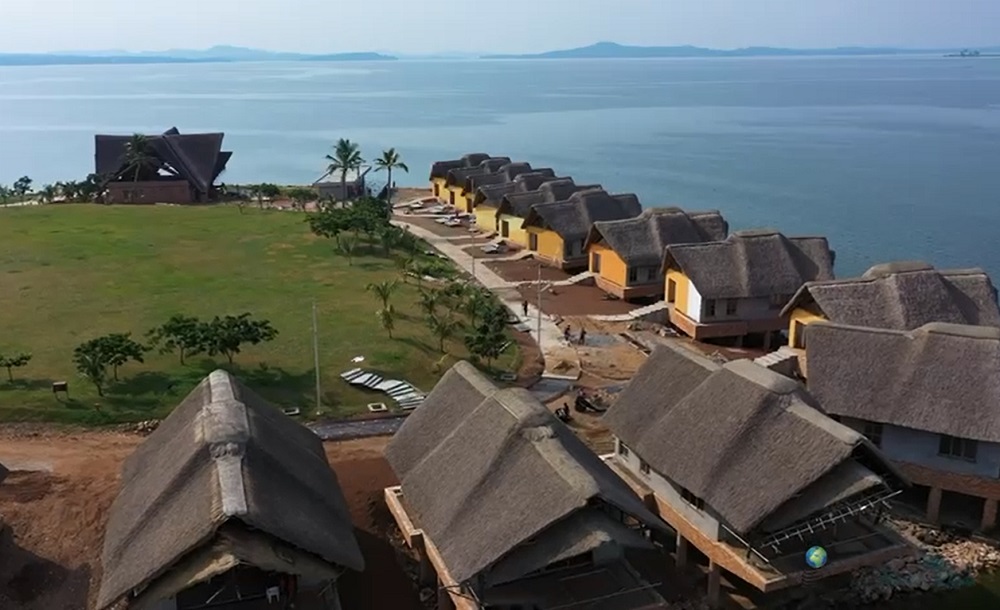
That conservative discipline has produced one of the largest private property portfolios in the country. Through the Ruparelia Group, he controls an estimated network of more than 300 commercial properties, including office complexes, banking halls, hotels, shopping arcades, schools, resorts, and mixed-use developments. By scale and influence, he stands as Uganda’s most dominant private landlord.
Strength Built Across Market Cycles
What distinguishes Ruparelia’s property empire is not just size, but endurance. During periods of economic slowdown, political uncertainty, and the disruption that followed the COVID-19 pandemic, he did not abandon the market. Instead, he focused on consolidation, reinvestment, and selective expansion.
His strategy has consistently aligned with long-term urban growth rather than short-term demand spikes. As Kampala’s population expands and the city deepens its role as a regional commercial hub, his developments have been positioned to absorb that growth steadily.
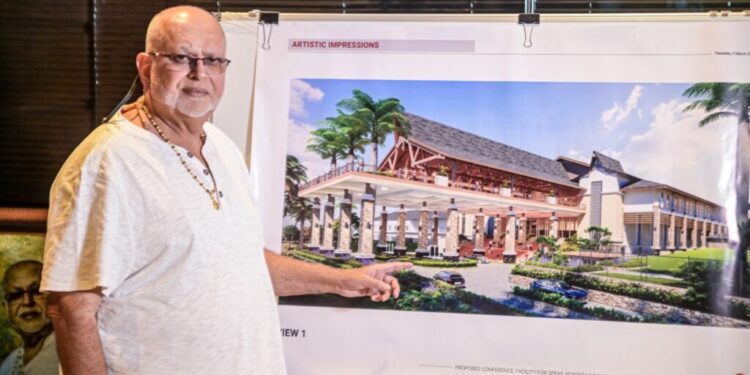
The clearest recent signal of this long-term confidence is Phase Two of Kingdom Kampala, a 21-storey mixed-use tower featuring a rooftop helipad, a rare feature in privately developed buildings in Uganda. The inclusion of the helipad is widely seen as intentional rather than decorative. Market analysts note that it caters to a specific class of global clientele, including energy sector executives, diplomats, financiers, and multinational investors who prioritize efficiency, security, and international-grade infrastructure.
Redefining Urban Development
Phase Two builds on the success of Kingdom Kampala Phase One, completed in 2019. That initial development transformed a previously underutilized site in the Central Business District into a major commercial destination. It altered pedestrian movement, revived nearby businesses, and strengthened Kampala’s profile as a regional business center.
Ruparelia’s emphasis on mixed-use developments reflects a broader urban planning approach often described as the vertical city model. By integrating retail, office space, hospitality, and high-end residences within a single development, these projects maximize land use while creating self-sustaining commercial ecosystems.
Urban economists note that such developments deliver broader economic benefits. They stimulate construction supply chains, expand formal employment, widen the tax base, and attract long-term capital. In an economy growing at approximately 5 to 6 percent annually, large private developments serve as stabilizing anchors for investor confidence.
Premium Assets, Consistent Performance
The recent completion of Pearl Tower One, a 19-storey landmark within Pearl Business Park, further highlights Ruparelia’s shift toward premium-grade assets designed for long-term performance. In a market where oversupply has strained smaller developers, his properties have continued to attract high-quality tenants and maintain strong rental yields.
Analysts attribute this resilience to disciplined site selection, conservative timing, and investment horizons measured in decades rather than quarters.
Across banking, education, hospitality, and real estate, Ruparelia has shown a consistent ability to turn periods of disruption into moments of consolidation. While others exited under pressure, he acquired, restructured, and quietly expanded, playing a central role in shaping Kampala’s modern commercial landscape.
Built for the Long Run
Kingdom Kampala Phase Two is therefore not simply another high-rise on the skyline. It represents a statement about where Kampala is headed and how serious private capital views its future.
In a property sector often driven by haste and leverage, Sudhir Ruparelia’s record offers a different conclusion. In Uganda’s most challenging real estate environment, patience, restraint, and resilience have proven to be the strongest assets of all.