

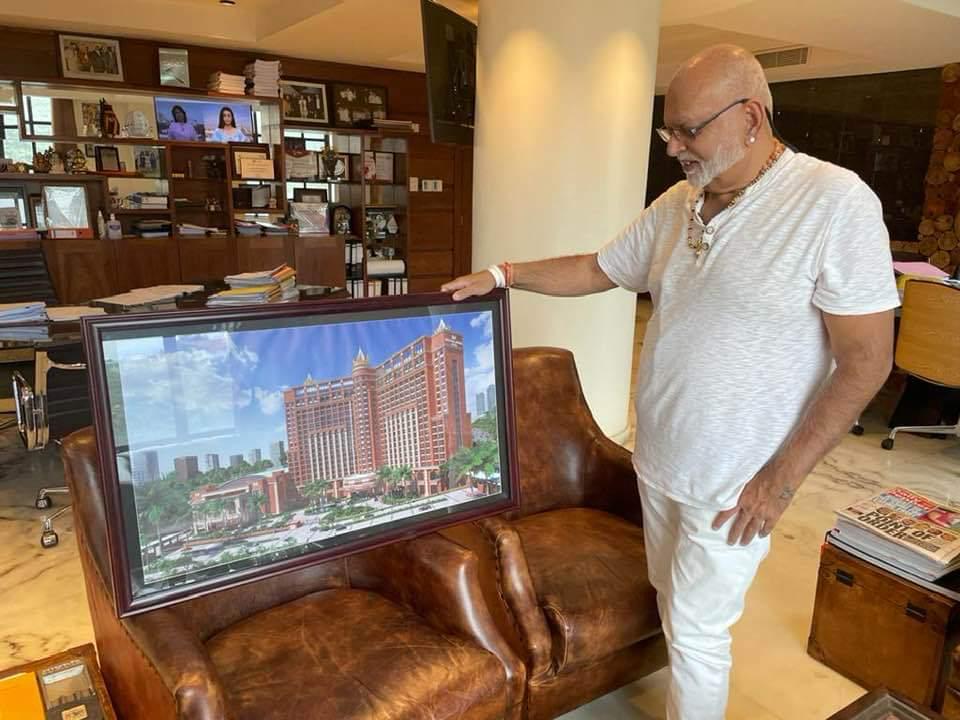
In Uganda’s business world, where executives chase headlines and flood social media with hot takes, one of the country’s richest men has taken a different path. Sudhir Ruparelia doesn’t talk.
He has no verified social media accounts. He has publicly disavowed fake profiles bearing his name. He rarely sits for interviews, steers clear of political commentary, and when controversy finds him, as it did spectacularly during the 2016 Crane Bank takeover, he responds not with press conferences but with lawyers and ledgers.
And yet, his influence has only grown.
An Empire That Speaks for Itself
Sudhir’s footprint on Kampala is impossible to ignore. Luxury hotels, office towers, shopping malls, residential developments: his properties define the city’s skyline. Beyond real estate, his interests stretch across hospitality, education, insurance, agribusiness, and manufacturing. His name saturates Uganda’s business landscape even as his voice remains conspicuously absent from it.
That contrast is no accident. In a political and regulatory environment where a stray remark can invite scrutiny, retaliation, or both, Sudhir has turned reticence into a competitive advantage.
“He doesn’t need to win arguments in public,” one Kampala-based business analyst observed. “He wins them through assets, contracts, and time.”
When Silence Became a Shield
The Crane Bank episode tested that philosophy. When regulators seized the bank, once the crown jewel of his financial portfolio, many expected a loud, public fight. Sudhir went quiet instead, channelling his response through the courts while reorganising his broader business interests behind the scenes.
Years on, the legal and political fallout continues to reverberate, but the rest of the Ruparelia empire has not just survived. It has expanded. New hotel properties opened. The real estate portfolio grew. Schools enrolled thousands more students. The machine kept running, unbothered by the noise.
In a country where the relationship between business and the state can shift overnight, that kind of discretion has proven to be more than a personality trait. It has been a survival strategy.
The Man Behind the Silence
Those who deal with Sudhir privately describe someone quite different from the enigmatic figure the public imagines. Business partners and political insiders say he is personable, generous, and a sharp listener: someone who makes decisions quietly but maintains close, active relationships with the people who matter.
He shows up where decisions are made. He just doesn’t show up where cameras are rolling.
This selective engagement means that while his public persona remains deliberately opaque, his private influence network is extensive and well-maintained. He is not withdrawn. He is simply choosing his audience.
A Brand Built on Absence
The result is a kind of accidental branding. To tenants and partners, Sudhir is reliable. To regulators, cautious. To competitors, impossible to read. To the general public, a mystery.
Unlike more flamboyant tycoons whose personal opinions bleed into their companies, Sudhir has managed to separate the individual from the enterprise. His businesses communicate through completed buildings, operational stability, and paid salaries: not trending hashtags or talk-show appearances.
It is hard for scandals to stick to someone who never comments.
A Counterintuitive Lesson
For Uganda’s next generation of entrepreneurs: many of whom equate online visibility with success: the Ruparelia model offers a provocation. Visibility and power are not the same thing. In a noisy digital economy, restraint can be radical. Saying less can allow your assets to do the talking.
As Uganda’s business environment grows more competitive and more politically charged, the billionaire who rarely speaks continues to build, lease, expand, and endure. His silence, it turns out, has been the loudest statement of all.